
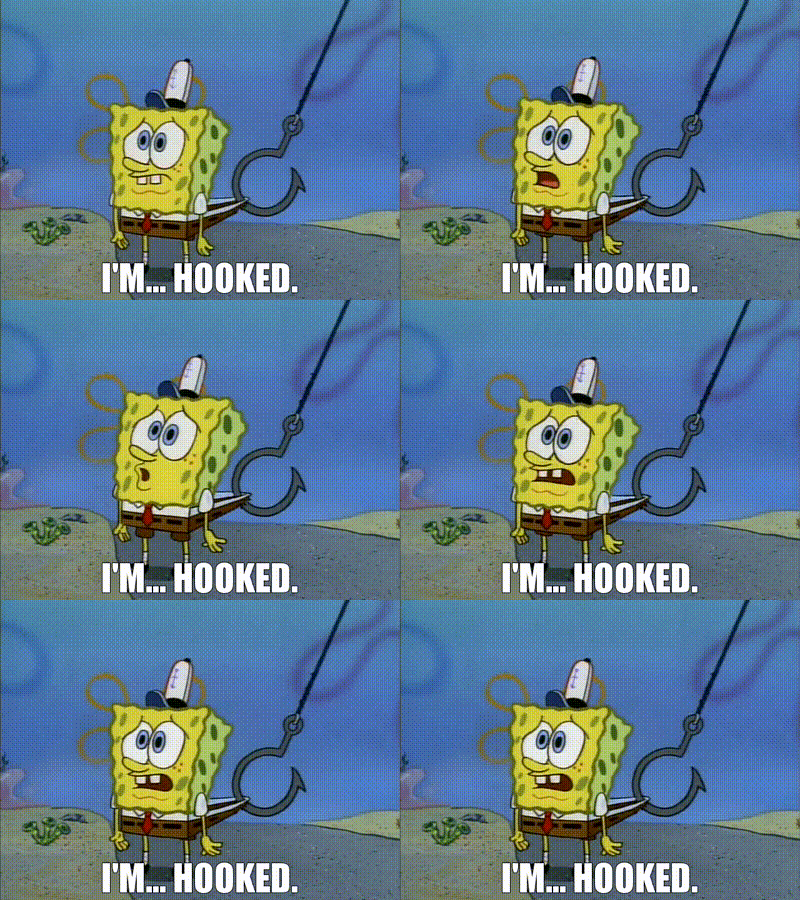
We’ve all been there.
- someone you trust asks you for a favor because “I’m counting on you!”
- Someone responds to criticism by laying out all the ways your criticism hurt them (victim blaming)
- You’re asked to do something unethical or unreasonable at work because “we’re a family and families have to do what needs to be done sometimes!”
These are emotional “hooks”. I am not a therapist, so do not consider this a formal definition, but a hook is something that will reliably work to tap into your emotions. This makes you less rational in the face of choices and decision making. They are used by everyone (yes, everyone – no one is immune!) at times, but particularly manipulative individuals understand how to weaponize them.
The manipulator also understand that well-intended people face moral dilemmas that they don’t. If you tell me, “do this for me or I’ll be really hurt”, I, like most of us, will have a fight or flight moment. How we respond next is crucial. We have four options:
- Fight:
- This is what happens if we’ve been going along with toxic behaviors for way too long.
- Ever “have enough” and explode in an irrational way that was wrong?
- Flight
- Get out of the situation – do this if possible. When you feel that fight or flight response kicking in, don’t engage. Find a neutral way to end the conversation and find some space to process it.
- Freeze
- Do not engage, but do not address it. You’ve decided your best bet for survival in this moment is to play dead, hunker down, and wait for the crisis to be over so you can regroup.
- Fawn
- “if you can’t beat em, join em”
- This is the pattern familiar to anyone who’s been in toxic relationships.
- Pretend nothing is wrong, concede to the other person
No one can tell you what the right response is. What’s right for a struggling worker with 4 kids who can’t tell their boss no may be different from what’s right for somebody with more economic resources.
But knowing about these responses and being intentionally aware of your choice is the key to enormous empowerment.
Fawning to avoid immediate harm to yourself but knowing exactly why you are doing it – to survive while you figure out how to get out of the situation – puts the decision making back into your court. Don’t underestimate that. We cannot make competent decisions in any area when we are trying to make sense of a situation. We are just reacting and hoping something works.
Contrast that with realizing you are being abused and working toward an exit strategy while protecting yourself. It’s quite different. Now, while you don’t have control over the situation, you do have a plan. Plans are the difference between hope and hopelessness.
As an example: Employers in the US have no idea what is about to happen economically, and as a result, they are shifting all risk and anxiety to their workers. They want their employees to believe that it somehow is on them if giant corporations fail because worker morale was low.
That was a bit of a detour into fight or flight, but here’s why it matters – recognizing when we’re going into that mode can prevent anyone from “hooking” us with manipulation.
Google “fight flight freeze fawn”. Now, read about all the common symptoms.
If any of those symptoms start, there’s a good chance you are being manipulated. This is very different from getting objectively bad news. Bad news evokes an immediate negative reaction. Fight or flight is much more subtle. You feel absolutely paralyzed by a situation you don’t yet fully understand. that is ok.
Now you know what do to. You’ve been here before. You are being manipulated. Manipulative people operate on a shockingly small number of rules. You can use this to your advantage.
Now, figure out whether you should fight, flight, freeze or fawn based on the danger level in the moment.
Don’t get hung up on choosing the “right” answer. Just start being more aware and making the choice yourself. What you will find is that just like interest, confidence and power compound. Your decision the last time will help make the decision the next time easier. It will always be break throughs and set backs, but you will start finding that even the choice you are able to take in the moment becomes the one you couldn’t make earlier on. Maybe the first time, all you could do was fawn again but tell yourself “Not forever”.
Don’t wait for an outcome. Outcomes are the result of a thousand small moments. You can start having those moments right now.
 Debugging the Spectrum
Leave a comment